MAY ALL BEINGS BE FREE FROM SUFFERING

Snowy: An introduction to relational ethics and the internal work of letting go
Sometimes not eating animals is very easy, but not using animals for our enjoyment is very hard. In this blog post I share a story about not using a horse for companionship and letting her just be a horse. It is an introduction to relational ethics from a vegan perspective.
PLANTS ON PURPOSE
Allie
2/10/20262 min read
The first thing I noticed, with relief, is that I didn't need her to love me.
I didn't need her to comfort me. I didn't need her to do anything or be anything for me. Snowy could just be the horse that she is.
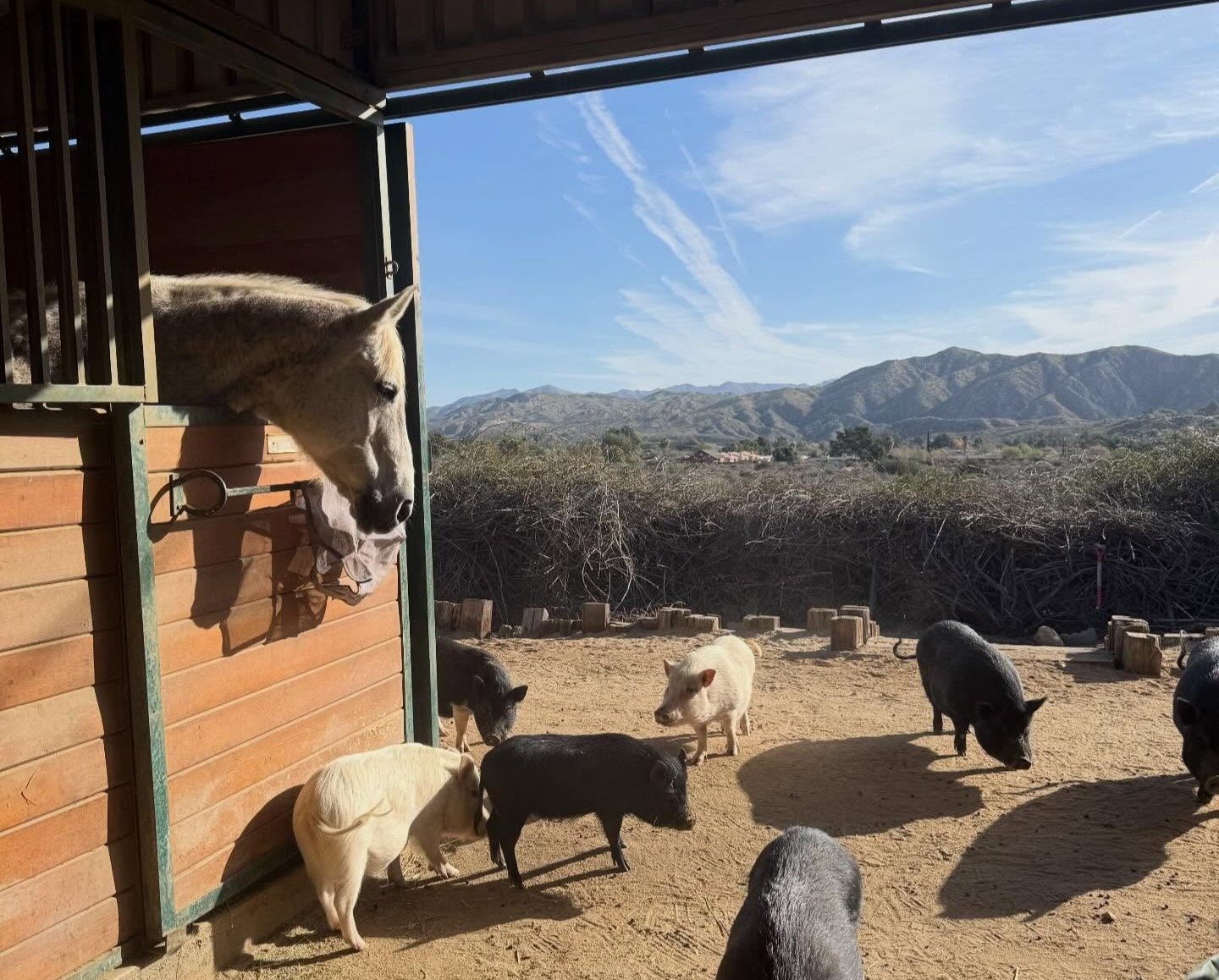
The farm animal sanctuary where I volunteer adopted a horse last month. My interaction with this lovely gray mare was the first time I was in the presence of a horse in five years. That’s when I let mine go and shed also my identity as a horsewoman. That word – part horse, part woman run together – describes the blurred boundaries of autonomy that are inherent in equestrianship. The same goes for the word “team” when trying to explain the combined effort and, thus, the will of both horse and rider or horse and owner of any kind.
After a lifetime of using ponies for pleasure and profit, slowly and then all of a sudden, I was done. No argument could convince me it was ethical to ride. No argument could convince me it was compassionate to keep this species as a pet of any kind.
But like all domesticated animals, we are responsible for their sheer existence. Once we've bred horses, they are forever dependent on us. Deciding not to personally use horses for sport or pleasure is one way to go; giving sanctuary to a rescued animal is another. And that’s how I found myself in that forever-known place, the form of her body felt without looking, the smell intrinsic. What was different this time was me.
Sometimes not eating animals is very easy, but not using animals for our enjoyment is very hard. People will espouse all the gray areas, but it’s easier for me to make things black and white. Domestic horses in our world exist because we put them here. We may not be complicit in buying, using and, frequently, abusing them; but we can be caregivers with agendas only to safely shelter, generously feed and fabricate a sense of freedom. What about lavishing attention and affection, then? I ask myself, is it requested, and can I do it without wanting anything in return?
This is an example of a real-life, real-time vegan challenge I’m having. I’m looking at what sanctuary can be when it’s not a performance of love but an act of responsibility. The challenge is to reimagine, not just abstain. If any part resonates with you and you’d like to go deeper: Think about how you relate to animals, considering the issues of power, identity and desire. If not a horse, what about a pet dog, cat, snake or bird?
Want to talk about it? Send me a message at allie.irwin@gmail.com.
Photo of Snowy with her family at Laster Ranch, courtesy of Kerry Uher Laster